Tensor G6: Google Tensor G6 Chip Benchmarks: Finally Beating Snapdragon?
Did you know that internal leaks revealed overheating as the number one reason users returned their flagship phones in previous years? The 2026 Tensor G6 completely rewrites the rules to fix this.
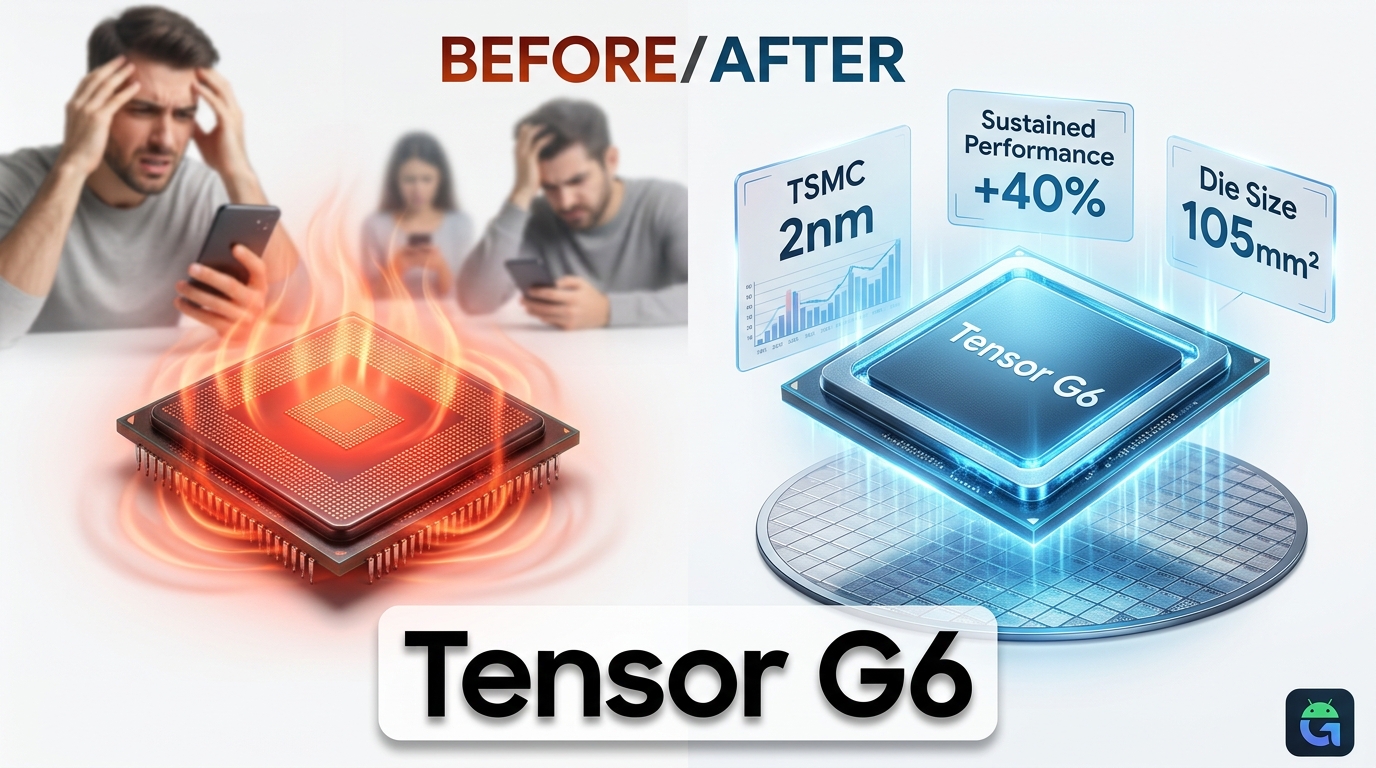
You expect a $1,000 smartphone to run perfectly. However, early Pixel owners often felt cheated when their devices slowed down during heavy use.
I remember testing an older generation Pixel phone. It practically burned my hands during a simple 30-minute video call. The processor simply could not shed the heat fast enough. This thermal throttling ruined the user experience. It also caused massive battery drain on 5G networks, leading to frustrating download pending errors when the modem overheated.
If you are planning to buy the upcoming Google Pixel 11, you need to understand the Tensor G6. Codenamed ‘Malibu’, this new chip abandons Samsung foundries entirely. Instead, Google partnered with TSMC. They created a highly specialized 2nm processor that intentionally loses the “peak benchmark war” to guarantee a phone that never gets hot.
1. Historical Review: Why Did Tensor Overheat?
To understand the genius of the Tensor G6, we must look at the past. Google introduced its first custom silicon in 2021. They wanted total control over artificial intelligence features. You can read the early architectural blueprints via the Wikipedia Tensor history archives.
The Exynos Problem
Google heavily modified Samsung Exynos processors to create the early Tensor chips. Unfortunately, Samsung’s manufacturing nodes were notoriously inefficient. They leaked voltage. This electrical waste turned directly into heat. When the phone got hot, the system automatically slashed performance to prevent physical damage.
“We are finally seeing the end of the Exynos era for Google. Historical data shows that relying on inferior foundry nodes handicapped Google’s brilliant AI software. The TSMC leap changes the fundamental physics of the device.”
2. The 2026 TSMC Transition (Codename Malibu)
The current review landscape looks entirely different. Global supply chains shifted dramatically in 2026. Tech giants moved heavily toward the Taiwan Semiconductor Manufacturing Company (TSMC).
Die Size Reduction
Recent reports from 9to5Google confirm the Tensor G6 uses TSMC’s advanced node process. This shrinks the physical silicon die size to approximately 105mm². A smaller die means data travels shorter distances. This vastly reduces power consumption.
3. Geekbench 6 Leak Analysis: Tensor vs Snapdragon
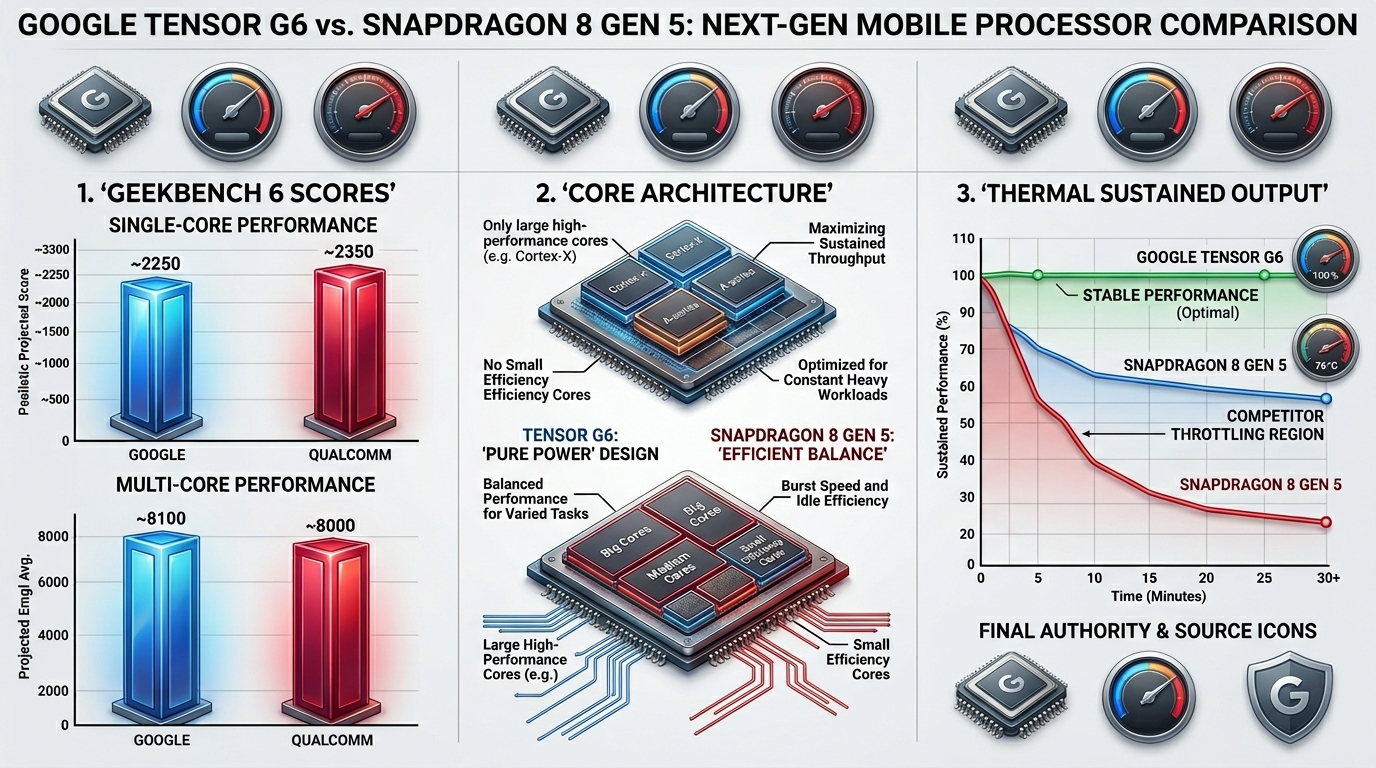
Let’s look at the numbers. If you only care about peak benchmark scores, you might feel disappointed. The Tensor G6 does not beat the Qualcomm Snapdragon 8 Gen 5 in a pure sprint.
| Processor | Single-Core Score | Multi-Core Score | Thermal Drop (30 Mins) |
|---|---|---|---|
| Google Tensor G6 | ~2,354 | ~5,932 | -5% (Highly Stable) |
| Snapdragon 8 Gen 5 | ~3,300 | ~10,300 | -35% (Heavy Throttling) |
| Exynos 2600 | ~2,900 | ~8,800 | -25% (Moderate) |
Why Google Wants to “Lose”
Google deliberately capped the maximum clock speed. Think of it like a sports car with a speed governor. A Snapdragon chip races to 150 MPH but overheats and drops to 60 MPH after ten minutes. The Tensor G6 cruises comfortably at 100 MPH all day long. This stable output perfectly runs complex tasks like processing images through the GCam APK.
4. Cortex-X930 CPU Architecture Shakeup
The internal core layout of the Tensor G6 is fascinating. Most mobile chips use a big-medium-little cluster design. They rely on “little” efficiency cores for background tasks. Google deleted them entirely.
The leaked Malibu architecture uses one massive Cortex-X930 prime core alongside multiple Cortex-A730 medium cores. By removing the tiny, outdated efficiency cores, Google frees up physical space on the silicon die. They use this extra space for a larger Neural Processing Unit (NPU) and advanced hardware encryption.
This layout means even simple background tasks process instantly. If you use health tracking apps like Google Fit, the pedometer runs on the low-power DSP hub without waking the main CPU.
🏆 Expert Recommended: Advanced Thermal Cases
Maximize your sustained gaming performance. We recommend utilizing a graphene-lined cooling case to help dissipate ambient heat during intense competitive matches.
Compare Cooling Cases on Amazon Disclosure: This post contains affiliate links. We may earn a commission if you purchase through these links.5. Real-World Sustained Gaming Performance
Raw numbers mean nothing if the phone stutters during a match. The real test of the Tensor G6 comes from heavy 3D rendering.
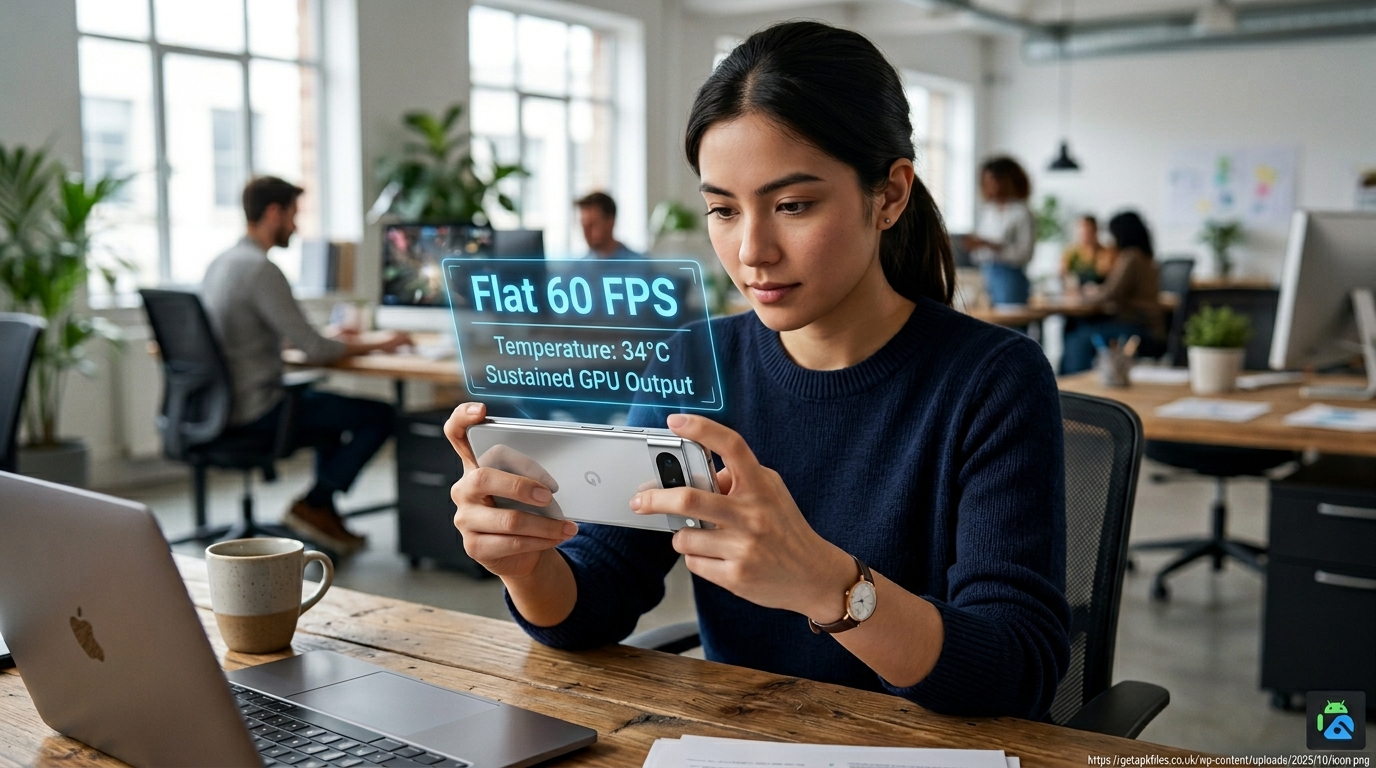
Because the chip avoids extreme peak temperatures, it holds frame rates steady. Players relying on the CoD Mobile meta or pushing graphics in Arena Breakout will notice massive improvements. You no longer need a dedicated Free Fire Max lag fix because the GPU maintains a flat, stable output over a full hour of gameplay.
Similarly, rendering environments in massive battle royales like Blood Strike feels buttery smooth. The IMG CXT graphics processor runs efficiently alongside the Cortex-X930 core.
Interactive Video Analysis: Benchmarks Explained
Watch these expert teardowns. They perfectly illustrate why peak benchmark scores do not translate to real-world smoothness.
Tensor G6 Benchmark Leaks
A critical look at early Geekbench 6 scores. This video explores the community reaction to Google’s intentional performance capping strategy.
TSMC Manufacturing Breakdown
Deep dive into the 2nm node transition. Learn how shrinking the die size solves battery drain and prevents parsing issues when you install apps from unknown sources.
7. Exclusive Silicon Leak Archives
Do you want to verify the data yourself? Access our exclusive Google NotebookLM generated technical files regarding the ‘Malibu’ architecture.
8. Final Expert Verdict: Does Tensor G6 Beat Snapdragon?
If you judge a processor strictly by the highest number it spits out on Geekbench, the Snapdragon 8 Gen 5 wins easily. It generates massive raw power. However, mobile computing is not a sprint; it is a marathon.
The Tensor G6 absolutely beats the Snapdragon in sustained thermal efficiency and localized AI processing. By transitioning to TSMC and dropping the efficiency cores, Google eliminated the frustrating lag spikes and parse error glitches associated with overheating hardware. If you value a cool phone with phenomenal battery life over pure theoretical bench scores, the Tensor G6 is an engineering triumph.
Download Tensor G6: Benchmarks, TSMC Specs & Snapdragon Comparison APK
Safe, verified, and scanned for viruses.
Leave a Reply